How Industrial Automation Enables Real-Time Manufacturing Intelligence
Manufacturing used to run on hindsight. A shift ended, reports were printed, supervisors compared scrap numbers to yesterday, and someone tried to explain why line three missed target again. By the time the story was clear, the material was already consumed, the downtime had already happened, and the customer promise was already at risk.
That lag is exactly what industrial automation changes. Not simply because machines move faster or require fewer manual interventions, but because modern automation systems turn physical production into a live stream of operational truth. A conveyor stop, a torque spike, a drifting temperature loop, an operator override, a barcode mismatch, a quality failure at final test, all of it can be captured, contextualized, and acted on while production is still underway.
Real-time manufacturing intelligence is not a dashboard by itself. It is the ability to understand what is happening on the plant floor as it happens, why it is happening, and what should happen next. That capability depends on automation being designed not only to control equipment, but also to expose meaningful data from machines, processes, materials, and people.
The move from automation for control to automation for insight
For years, many plants invested in factory automation for one clear reason: improve throughput and consistency. A programmable logic controller replaced relay logic. An HMI gave operators a cleaner interface. A robot handled repetitive pick-and-place work with better cycle stability than manual labor. Those improvements were real, and in many facilities they still deliver the bulk of the return.
But there is a meaningful difference between automated operation and intelligent operation.
A packaging line may already be automated, yet still leave managers blind to microstoppages that quietly steal 12 percent of capacity over a week. A filling process may hold average weight within spec, while variation gradually increases and drives giveaway costs that only show up in monthly material analysis. A CNC cell may look productive by utilization, but actually spend too much time waiting on upstream material, tool offsets, or quality approvals.
Industrial automation creates value twice. First, it executes work. Second, if designed properly, it reveals what the work is telling you.
That second layer is where many plants now focus their attention. The question is no longer just, “Can we automate this process?” It is, “Can our automation systems tell us, in real time, whether this process is healthy, stable, profitable, and likely to remain that way for the rest of the shift?”
What real-time manufacturing intelligence actually looks like on the floor
The phrase sounds abstract until you stand beside a line that uses it well.
Imagine a high-volume assembly operation producing electromechanical components. The line includes feeders, torque tools, vision inspection, leak testing, label verification, and final pack. In a conventional setup, each station does its job, and someone later pulls reports from separate systems if a problem appears. In a well-architected manufacturing automation environment, those stations do more than complete tasks. They continuously report condition, status, and performance in a common operational language.
The torque tool does not simply return pass or fail. It provides curve data, cycle time, retry counts, and drift trends by part family and operator. The vision system does not merely reject defects. It can reveal which cavity, feeder lane, or supplier lot is driving the pattern. The leak tester does not just alarm on a bad part. It shows a creeping shift in failure distribution over the past 40 minutes, enough to trigger a maintenance check before scrap spikes.
The best part is not visibility for its own sake. It is timing. When intelligence is available immediately, response changes from forensic to preventive.
A line leader sees repetitive sensor faults on one infeed lane and reroutes flow before starvation hits downstream stations. A process engineer notices clamp pressure variation after a tool change and corrects it before first-pass yield degrades. A maintenance technician receives a real alert tied to motor current, cycle count, and temperature deviation rather than a generic “machine fault” message that forces guesswork.
This is what separates real-time intelligence from ordinary machine monitoring. The system is not just collecting signals. It is organizing them into operating decisions.
The technical foundation: where the intelligence comes from
There is no mystery behind this. Real-time manufacturing intelligence emerges when several practical layers work together.
At the equipment level, sensors, drives, controllers, and machine interfaces produce raw data. Some of that data is event-based, such as a stop code or a reject result. Some is continuous, such as pressure, vibration, energy draw, speed, or position. None of it is useful for decision-making until it is time-stamped, contextualized, and tied to the process step, asset, product, or batch that matters.
At the control level, PLCs, PACs, motion controllers, safety controllers, and edge devices execute logic and determine machine behavior. In older environments, the control system often acted as a closed box. In more mature industrial automation solutions, it acts as both controller and data source, structured so information can be extracted reliably without burdening critical control performance.
Above that sits the supervisory layer, where SCADA, HMI platforms, MES functions, historians, or plant data platforms aggregate and organize events from across lines and cells. This is where one machine’s local data becomes plant-level intelligence. A stop event gains meaning when it is linked to product code, shift, operator team, and upstream state. A quality issue becomes more actionable when tied to environmental conditions, machine settings, and tooling age.
Then comes business context. Enterprise systems, planning tools, maintenance systems, and quality platforms add dimensions that operators alone cannot see. A short stop on a secondary process may not matter if finished goods inventory is healthy. The same stop becomes urgent if a customer order is due in six hours and the process is the bottleneck.
That stack sounds straightforward on paper. In practice, it succeeds or fails based on details. Signal naming standards matter. Clock synchronization matters. Alarm philosophy matters. Tag structures matter. The difference between useful intelligence and digital clutter is often found in those unglamorous decisions made during system design.
Why visibility alone is not enough
Plants often invest in connectivity and then wonder why nothing changes. Screens multiply. Dashboards look impressive. A daily email report arrives with more charts than anyone has time to interpret. Yet output remains flat, scrap remains stubborn, and planners still rely on phone calls to figure out whether an order is actually on track.
That happens because raw visibility is not the same as operational intelligence.
If every machine broadcasts hundreds of tags but no one agreed on which losses matter, what thresholds require action, or who owns response, the data becomes background noise. I have seen facilities install extensive machine monitoring only to discover six months later that operators still write downtime reasons on whiteboards because the automated codes are too vague to trust.
Useful intelligence has three characteristics. It is timely enough to support intervention, specific enough to guide action, and credible enough that people believe it. Lose any one of those and the system underperforms.
A simple example illustrates the point. Suppose an automated line reports OEE every minute. That sounds advanced. But if availability losses are grouped under a generic “faulted” category, performance losses ignore short stops under 60 seconds, and quality losses are posted only after end-of-shift reconciliation, the line is not truly visible in real time. It is merely generating delayed summaries at high frequency.
Manufacturing automation delivers stronger results when the information model reflects how the plant actually runs. Operators need actionable fault trees, not abstract categories. Supervisors need bottleneck clarity, not just machine-by-machine uptime percentages. Engineers need process variables tied to product genealogy. Maintenance needs failure signatures, not just timestamps.
The practical gains plants see first
When real-time intelligence is built into industrial automation, the earliest wins are usually less glamorous than people expect. They also tend to be the most valuable.
One common gain is reduction in response time. A machine that used to sit idle for eight minutes waiting for diagnosis may now be back in production in three because the fault context is clearer. Across a busy line, that alone can recover significant capacity. On a line cycling every few seconds, a handful of small delays repeated through a shift can add up to hundreds or thousands of units.
Another gain is the exposure of hidden losses. Most plants know their major downtime events. Fewer understand the cumulative impact of brief interruptions, manual resets, slow cycles, and sequence hesitations that never trigger formal incident reviews. Once automation systems track these events consistently, the “mystery losses” become visible enough to attack.
Quality often improves next, not because the automation magically makes better parts, but because process drift becomes easier to spot before defects pile up. In one common pattern, a process remains technically within specification while trending toward its limits. Without real-time monitoring, the drift goes unnoticed until downstream rejects rise. With better intelligence, teams intervene while yield is still intact.
Scheduling decisions also improve. When production status is current and trustworthy, planners stop relying on stale assumptions. This is particularly important in mixed-model industrial robotics operations where a line can be running but not running the right product, at the right pace, with the right quality output to support customer commitments.
Energy and maintenance benefits usually follow. Motors, compressors, heaters, and pumps rarely fail without leaving clues. The clues are often there in current draw, cycle time, vibration, temperature, or control valve behavior. Good factory automation does not just automate the asset, it gives the plant a way to hear those clues early.
Where industrial automation solutions often go wrong
There is a temptation to think more data always leads to more intelligence. In live plants, the opposite is often true.
I have seen projects where teams insisted on pulling every available tag from a machine builder’s control package because “we might need it later.” The result was a bloated integration effort, poor data hygiene, and long meetings spent debating which signals were meaningful. Meanwhile, a short list of essential operating states would have solved most day-to-day problems.
Another common failure is treating the project as an IT exercise rather than an operations initiative. Connectivity matters, cybersecurity matters, infrastructure matters. But if the people configuring the system do not understand changeovers, line balancing, process capability, operator routines, and maintenance practice, the final product may look polished while missing the rhythms of actual production.
Poor event definition is another recurring issue. If stop reasons overlap, if machines auto-assign codes that operators immediately override, or if fault trees are so detailed that no one uses them consistently, then the reporting layer becomes suspect. Once trust erodes, teams revert to anecdotes.
The tougher challenge is cultural. Real-time intelligence removes a lot of ambiguity, and not everyone welcomes that at first. It exposes chronic minor stops that were previously invisible. It reveals that a line thought to be constrained by labor is actually constrained by changeover discipline. It shows that one shift performs differently from another under the same nominal conditions. None of this is comfortable. All of it is useful.
What a strong architecture looks like in practice
The most effective automation systems are usually not the most extravagant. They are the ones designed with purpose.
A strong architecture starts by deciding which decisions need support at each level of the operation. Operators need immediate machine state, standard work prompts, quality confirmation, and clear escalation paths. Supervisors need live throughput, bottleneck status, labor alignment, and downtime patterns. Engineers need high-resolution process data, parameter history, and correlation across variables. Leadership needs trend views that stay connected to the physical reality underneath.
Once those use cases are clear, the data model becomes easier to shape. You know what must be captured, how fast it needs to update, how long it should be retained, and what context must travel with it.
This is also where the distinction between local control and enterprise visibility matters. Critical control logic belongs as close to the machine as practical. Real-time reporting and analytics can sit above it, provided the design does not compromise deterministic performance. Plants get into trouble when they expect business systems to behave like control systems, or when they bury business-critical production insight inside isolated machine programs.
The strongest industrial automation solutions also anticipate evolution. Product mixes change. New inspection points are added. Traceability requirements tighten. Energy costs rise. A line built only for its first commissioning target often becomes brittle within a few years. One built with naming discipline, modular logic, scalable communications, and sensible data structures can grow without turning every upgrade into a reconstruction project.
A short checklist before investing in new capability
Before a plant expands its manufacturing automation footprint in pursuit of real-time intelligence, a few questions are worth settling early:
- Which production decisions are currently made too late to prevent loss?
- Which machine or process states must be captured to support those decisions?
- Who will use the information, and what action should they take when it changes?
- How will data quality be validated so the operation trusts it?
- Which metrics genuinely influence performance, and which are just convenient to display?
Those questions are simple, but they force discipline. They prevent teams from buying technology first and searching for purpose afterward.

The role of people in an automated, intelligent plant
There is a persistent misconception that more automation means less need for human judgment. On the best lines, the opposite is true.
When routine detection and reporting improve, people are freed to solve better problems. Operators spend less time hunting for causes and more time stabilizing flow. Maintenance technicians spend less time reacting blindly and more time intervening based on evidence. Engineers spend less time assembling spreadsheets and more time improving process windows, tool life, recipe settings, and line balance.
Real-time manufacturing intelligence makes human expertise more effective because it narrows the gap between event and understanding.
That only works if the system is designed around the people using it. Screen layout matters. Alarm burden matters. Training matters. A common failure in factory automation projects is assuming that if data is available, it will naturally be used well. It will not. The handoff between information and action must be designed as carefully as the machine sequence itself.
In one plant, a line had excellent downtime tracking but poor response because every fault message was pushed to the same supervisor screen. Critical stoppages were buried among nuisance events. Once the alerts were tiered by urgency and routed appropriately, line response improved without any hardware change. The intelligence had existed already. The workflow around it had not.
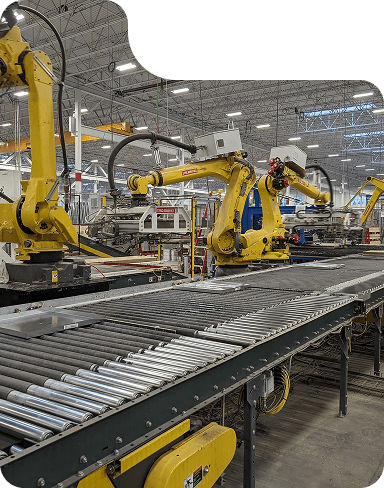
Real-time intelligence and quality traceability
Some of the most compelling returns show up where quality requirements are strict and product genealogy matters.
In medical device, automotive, aerospace, electronics, and regulated food production, it is no longer enough to know that a machine ran. You often need to know which settings were active, which component lots were consumed, who verified the step, what the inspection result was, and whether any process parameter drifted outside approved limits.
Automation systems make that possible by linking machine events to product identity at each stage. A scan confirms the work order. Components are validated before assembly. Process conditions are recorded at the moment of execution. Inspection results are attached to the unit or batch. If a downstream issue appears, the operation can isolate affected material quickly rather than quarantine everything produced during a broad time window.
That level of traceability reduces risk, but it also changes how plants learn. Instead of debating broad root causes, teams can compare actual production histories. Which parameter set produced the strongest yield? Which supplier lot correlated with rework? Which machine path generated the fewest leak test failures? These are not theoretical questions once the automation backbone captures the right evidence.
Why edge cases matter more than slide decks suggest
Many automation vendors present idealized flows where every machine speaks cleanly, every tag maps neatly, and every event is easy to classify. Real plants are messier.
Legacy equipment may have partial communications or none at all. Operators may work around machine prompts during peak demand. A process may have valid reasons for running differently across product families, making standard metric definitions harder than expected. Network interruptions happen. Sensors fail dirty rather than fail safe. A line can be technically automated and still rely on handwritten checks at one stubborn bottleneck.
These edge cases do not invalidate the goal. They simply mean that successful industrial automation requires judgment.
Sometimes the right answer is full integration. Sometimes it is a lightweight retrofit with a focused set of signals. Sometimes a manual confirmation step remains the safest and most practical choice, provided it is digitized clearly. The point is not to force every process into the same template. The point is to build enough visibility and control that the plant can manage performance as it unfolds.
What separates leaders from followers
The manufacturers getting the most from automation are not always the ones with the newest equipment. They are usually the ones that treat data as part of the process design, not as an afterthought.
They decide early what good production looks like in measurable terms. They define machine states carefully. They involve operations, maintenance, engineering, quality, and IT before architecture hardens. They pilot in one area, refine the event model, then scale what works. Most importantly, they use the information to change daily behavior.
That last point matters. Real-time manufacturing intelligence is not a decorative layer over industrial automation. It is a management discipline enabled by automation. If shift meetings still rely on speculation, if fault codes are ignored, if process trends are reviewed only after losses are booked, then even sophisticated automation systems will underdeliver.
When the discipline is there, the payoff compounds. Better information improves faster decisions. Faster decisions reduce loss. Reduced loss creates capacity and confidence. Capacity and confidence make the next automation investment easier to justify, and the next layer of intelligence easier to absorb.
That is how manufacturing moves from automated motion to operational awareness. Not with a single platform or a dramatic overhaul, but through deliberate design choices that let machines do what they do best, while giving people the timely, credible insight needed to run the plant better minute by minute.
Sync Robotics Inc. — Business Info (NAP)
Name: Sync Robotics Inc.Address: 2-683 Dease Rd, Kelowna, BC V1X 4A4
Phone: +1-250-753-7161
Website: https://www.syncrobotics.ca/
Email: [email protected]
Sales Email: [email protected]
Hours:
Monday: 8:00 AM – 4:30 PM
Tuesday: 8:00 AM – 4:30 PM
Wednesday: 8:00 AM – 4:30 PM
Thursday: 8:00 AM – 4:30 PM
Friday: 8:00 AM – 4:30 PM
Saturday: Closed
Sunday: Closed
Service Area: Kelowna, British Columbia and across Canada
Open-location code (Plus Code): VHWR+PQ Kelowna, British Columbia
Map/listing URL: https://maps.app.goo.gl/xwtV2wEu8ZuKH3se8
Embed iframe:
Socials (canonical https URLs):
LinkedIn: https://www.linkedin.com/company/syncrobotics/
Instagram: https://www.instagram.com/syncrobotics/
Facebook: https://www.facebook.com/syncrobotics/
https://www.syncrobotics.ca/
Sync Robotics Inc. is an industrial robot and controls integration company based in Kelowna, British Columbia.
The company designs and deploys automation solutions for manufacturing operations across Canada.
Services include industrial robotics integration, controls integration, automation system design, deployment support, and related manufacturing automation solutions.
Sync Robotics Inc. is located at 2-683 Dease Rd, Kelowna, BC V1X 4A4.
To contact Sync Robotics Inc., call +1-250-753-7161 or email [email protected].
For sales inquiries, email [email protected].
Hours listed are Monday to Friday 8:00 AM–4:30 PM, with Saturday and Sunday closed.
For directions and listing details, use the map listing: https://maps.app.goo.gl/xwtV2wEu8ZuKH3se8
Popular Questions About Sync Robotics Inc.
What does Sync Robotics Inc. do?Sync Robotics Inc. designs and deploys industrial robot and controls integration solutions for manufacturing operations.
Where is Sync Robotics Inc. located?
Sync Robotics Inc. is located at 2-683 Dease Rd, Kelowna, BC V1X 4A4.
Does Sync Robotics Inc. serve clients outside Kelowna?
Yes—Sync Robotics Inc. is based in Kelowna, British Columbia and serves clients across Canada.
What are Sync Robotics Inc.’s hours?
Monday–Friday: 8:00 AM–4:30 PM; Saturday and Sunday closed.
How can I contact Sync Robotics Inc.?
Phone: +1-250-753-7161
General Email: [email protected]
Sales Email: [email protected]
Website: https://www.syncrobotics.ca/
Map: https://maps.app.goo.gl/xwtV2wEu8ZuKH3se8
LinkedIn: https://www.linkedin.com/company/syncrobotics/
Instagram: https://www.instagram.com/syncrobotics/
Facebook: https://www.facebook.com/syncrobotics/
Landmarks Near Kelowna, BC
1) Kelowna International Airport2) UBC Okanagan
3) Rutland
4) Orchard Park Shopping Centre
5) Mission Creek Regional Park
6) Downtown Kelowna
7) Waterfront Park